01. Approach
Engineering at KREA Swiss is focused on developing professional food equipment that performs predictably over long service lives in demanding operating environments. Design decisions are guided by real workflows, material behaviour, and the conditions under which equipment is actually used, rather than abstract performance targets.
Through KREATIVITY, this engineering work remains closely connected to professional food businesses, ensuring that systems are developed against real operational needs rather than assumptions.
02. Design intent
Engineering work begins with observation of real workflows. Systems are designed around how equipment is used in practice, including duty cycles, cleaning regimes, operator variability, temperature exposure, and material handling characteristics.
The objective is not to maximise isolated performance metrics, but to create systems that behave consistently across extended operating periods. Compactness, controllability, and repeatability are prioritised over peak output or short-term optimisation.
03. Materials and wear
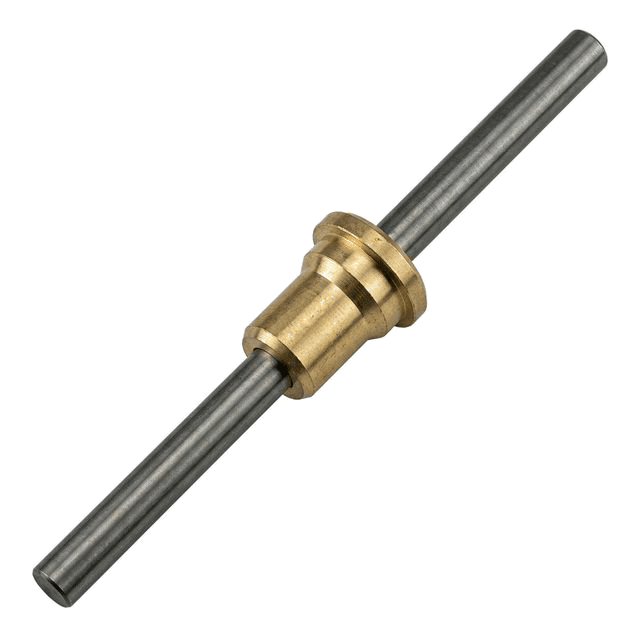
Material selection is treated as a functional design decision rather than a default choice. In high-load or high-precision areas, conventional food-grade stainless steel can present limitations due to thermal expansion and wear behaviour under friction.
Many of our systems operate under sustained mechanical load while handling heated materials and continuous high-frequency movement. In these conditions, even small dimensional changes can lead to increased friction, inconsistent behaviour, and accelerated wear, particularly when working with low-lubricity materials.
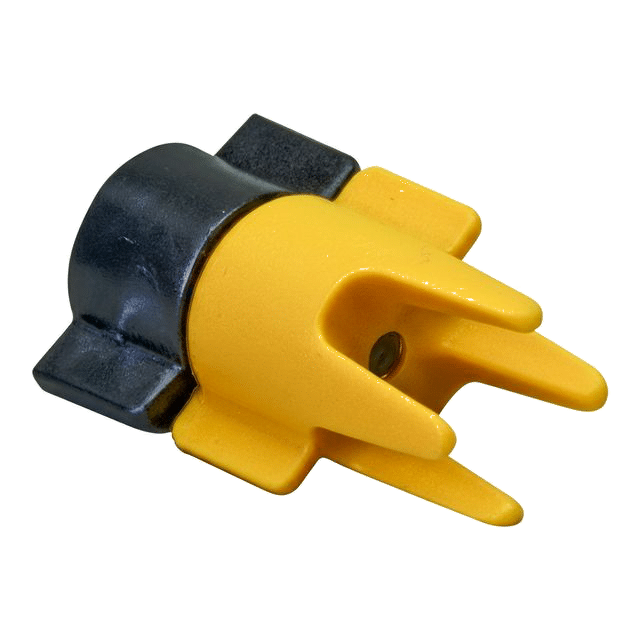
Where dimensional stability and long-term wear resistance are critical, alternative food-grade materials are used. In selected high-load and high-precision areas, this includes materials such as food-grade tungsten carbide, chosen for its dimensional stability and wear resistance under thermal and mechanical stress. In spray systems, industrial ruby orifices are integrated directly into the nozzle body to form the precision orifice itself, ensuring long-term resistance to abrasion and stable performance characteristics.
These choices reduce performance drift, minimise the need for adjustment or replacement, and support predictable behaviour throughout the service life of the system.
04. Reliability and service life
Systems are engineered with the aim of long-term reliability under sustained professional use. Design choices focus on reducing sensitivity to minor variations in operation, environment, and material behaviour.
By prioritising stability and durability at the mechanical level, the need for frequent intervention, recalibration, or replacement is reduced. Long service life is treated as a design constraint rather than an incidental outcome, with the objective of equipment that continues to perform predictably over many years of daily professional use.
05. Research and Development
The current product pipeline is the result of several years of focused development work, accelerated during the COVID period and grounded in decades of engineering experience.
With reduced pressure to prioritise short-term commercial growth during this period, additional time and resources were directed towards deeper analysis of food preparation workflows and longer-term system development. Several of the systems now approaching readiness have been in development for four to five years and represent new system architectures rather than incremental updates. Prototypes were built, tested, refined, and in some cases redesigned entirely as part of this process.
Ongoing development remains closely connected to professional users through KREATIVITY, ensuring that new systems are developed against real operational needs rather than abstract assumptions. Multiple smart, semi-automated, and automated systems are expected to roll out during 2026 and 2027.